
DVI Yogurt Starter Cultures for Greek & Stirred Yogurt High-Viscosity Exopolysaccharide (EPS) Strains
Engineered for industrial stirred, set, and concentrated Greek yogurt manufacturing, AntoCulture-YGT™ combines balanced symbiosis of Lactobacillus delbrueckii subsp. bulgaricus and Streptococcus thermophilus. Selected for robust exopolysaccharide (EPS) synthesis, creating thick creamy mouthfeel, high water-holding capacity, and strictly inhibited post-acidification during cold-chain distribution.
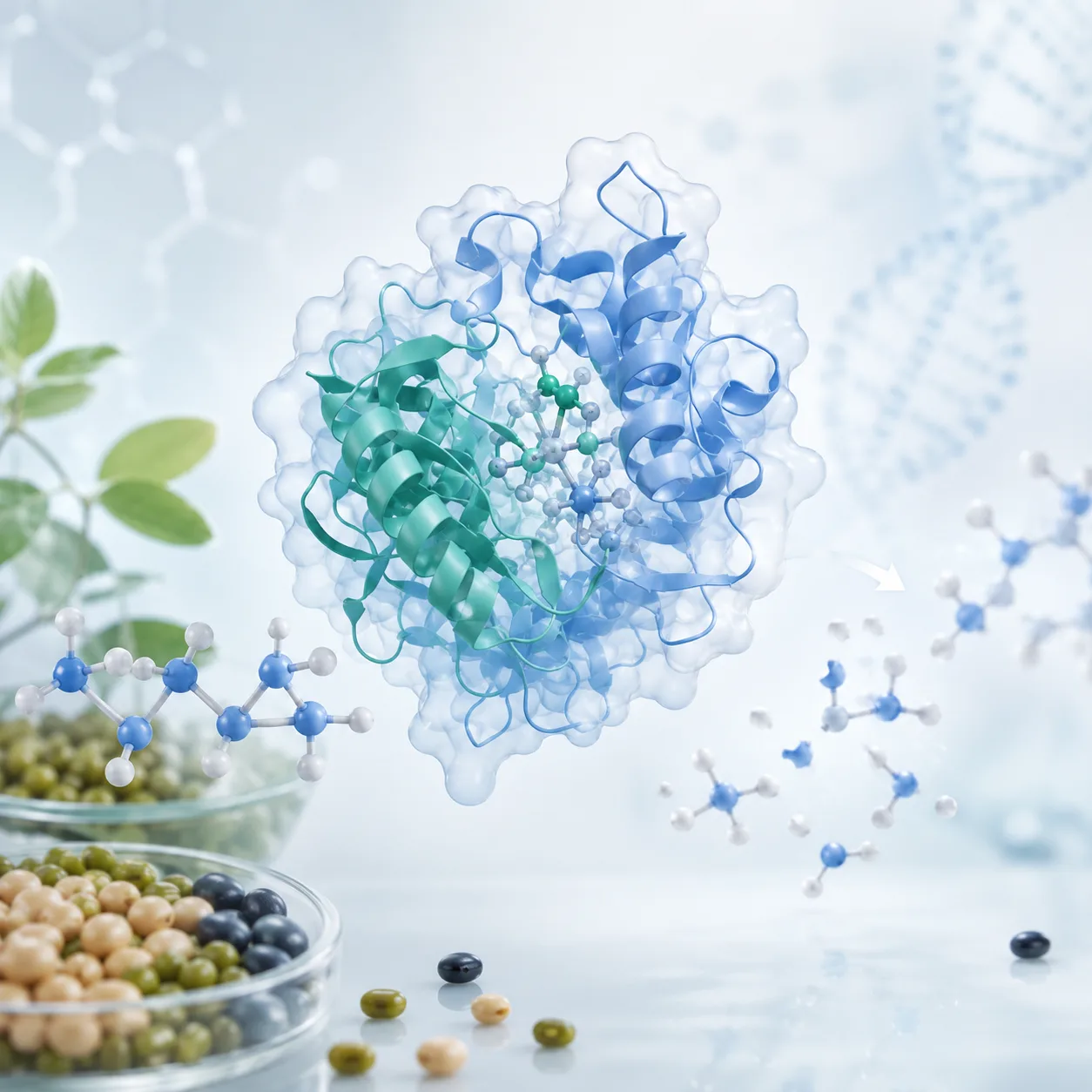
Symbiotic Proto-Cooperation, EPS Synthesis & Acid Kinetics
Streptococcus thermophilus initiates rapid lactose fermentation, utilizing oxygen and producing formic acid, pyruvic acid, and CO2, which stimulate the growth of Lactobacillus delbrueckii subsp. bulgaricus. In turn, L. bulgaricus utilizes cell-wall proteinases (PrtB) to hydrolyze milk caseins into essential amino acids and peptides that S. thermophilus requires. Proprietary EPS-secreting strains generate branched heteropolysaccharide polymers directly in situ, physically entrapment of free water within the casein micelle network, eliminating syneresis (whey pooling) and imparting a luxurious glossy texture without gelatin or starch additives.
Cleavage Mode & Substrate Target
Symbiotic Proto-Cooperation & Exopolysaccharide (EPS) Hydrocolloid Network
Turnover Rate & Specific Velocity
Engineered for rapid catalytic saturation, maintaining high turnover velocity at low inclusion rates. This reduces batch cycle time by up to 40% across commercial bioreactors.
Zero Harmful Side-Reactions
Purified via precision ultrafiltration to remove undesirable secondary enzymatic activities, preventing bitter peptides, haze artifacts, or textile fiber degradation.
Technical Specifications & Analytical Parameters
Antozyme manufactures DVI Yogurt Starter Culture in both spray-dried micro-granule powder and stabilized liquid concentrate formats.
| Analytical Parameter | Certified Specification Standard | Compliance Monograph |
|---|---|---|
| Product Form | Lyophilized Free-Flowing Fine Powder | Verified PASS |
| Strains Included | Lactobacillus delbrueckii subsp. bulgaricus, Streptococcus thermophilus | Verified PASS |
| Viable Cell Count | ≥ 1.0 × 10¹¹ CFU/g at packaging | Verified PASS |
| EPS Production | High Exopolysaccharide (EPS+) Rheological Network | Verified PASS |
| Post-Acidification | Ultra-low delta-pH (< 0.15 pH unit over 30 days at 4°C) | Verified PASS |
| Moisture Content | < 4.0% | Verified PASS |
| Coliforms | < 10 CFU/g (Absent in 1g) | Verified PASS |
| Yeasts & Molds | < 10 CFU/g | Verified PASS |
| Salmonella spp. | Absent in 25g | Verified PASS |
| Heavy Metals (as Pb) | < 5 ppm | Verified PASS |
| Storage Condition | -18°C deep freeze (24 mo) / +4°C cold room (6 mo) | Verified PASS |
| Certifications | FSSAI, ISO 9001:2015, Halal Certified, GMP | Verified PASS |
Primary Industrial Application Areas & Dosing Guidelines
Select an industrial sector to inspect operating parameters, typical inclusion rates, and verified processing yield gains.
Heavy Velvety Body with Minimal Whey Expulsion
Engineered for mechanical separation or ultrafiltration processes, maintaining thick spoonable body and clean mild acidity (pH 4.50) without sour bite.

Enzyme Kinetics, Temperature Window & Stability
Industrial bioprocesses require precise catalytic control under varying plant conditions. Antozyme DVI Yogurt Starter Culture is formulated for consistent reaction kinetics across wide thermal and pH gradients.
Fermentation Temperature Window (41°C – 43°C)
Optimum symbiotic balance is maintained at 42.0°C. Fermenting at 41°C favors S. thermophilus (mild creamy flavor), while 43°C slightly stimulates L. bulgaricus (tangy traditional European profile).
Acidification Trajectory & Post-Acidification Guard
Reaches fermentation break point (pH 4.55) in 4.0 to 4.5 hours. Proprietary metabolic dampening locks pH at 4.40–4.45 even after 30 days of cold storage, eliminating sharp acidity complaints.
Phage-Hardy Rotation & Viability Retention
Maintains high viable cell counts (> 1×10⁸ CFU/mL in finished yogurt) throughout 45-day commercial shelf life, fulfilling international Codex Alimentarius standards.
Industrial Raw Material Compatibility & Specific Dosing Matrix
Recommended commercial inclusion rates across primary industrial substrates. Exact dosage varies based on dry solids concentration, retention time, and desired endpoint.
| Substrate Type | Solids % (DS) | Operating Temp | Recommended Dosing | Target Metric | Demonstrated Process Gain |
|---|---|---|---|---|---|
| Standardized Whole Cow Milk (3.5% Fat, 12% TS) | 12.0% TS | 42°C | 10U / 100 Liters | Target pH 4.55 in 4h 15m | Creamy full-bodied stirred yogurt; zero gelatin needed |
| Skim Milk Base with Skim Milk Powder (SMP) | 14.0% TS | 42°C | 10U / 100 Liters | Target pH 4.60 in 4h 00m | Heavy velvety texture in fat-free formulation |
| Buffalo Milk Yogurt / Traditional Sweet Dahi | 16.5% TS | 41°C | 8U / 100 Liters | Target pH 4.65 in 4h 30m | Firm spoon-cut porcelain curd with glossy surface |
| Fortified High-Protein Greek Yogurt Base | 18.0% TS (10% Protein) | 42°C | 12U / 100 Liters | Target pH 4.50 in 4h 45m | Smooth non-grainy mouthfeel; overcomes buffering capacity |
| Drinking Yogurt Liquid Base (2.0% Fat) | 10.5% TS | 43°C | 10U / 100 Liters | Target pH 4.45 in 4h 00m | Stable fluid suspension; zero phase separation during 30 days |
| Recombined Milk Base (AMF + WPC80) | 13.5% TS | 42°C | 12U / 100 Liters | Target pH 4.55 in 4h 20m | Uniform emulsification and cohesive coagulum setting |
Comparative Benchmark: Antozyme vs. Conventional Alternatives
Head-to-head performance comparison across seven critical commercial and operational parameters.
| Operational Metric | Antozyme Proprietary Formulation | Conventional Product | Chemical Reagent / Alternative |
|---|---|---|---|
| Viable Cell Count | ≥ 1.0 × 10¹¹ CFU/g (Lyophilized) | 1.0 – 5.0 × 10¹⁰ CFU/g | Variable 10⁹ – 10¹⁰ CFU/g |
| EPS Polysaccharide Synthesis | High (In situ texturizing biopolymers) | Medium / Standard strain | Low (Requires added pectin/starch) |
| Post-Acidification Control | < 0.15 pH drop over 30 days at 4°C | 0.35 – 0.50 pH drop (sour taste) | 0.40 – 0.60 pH drop |
| Fermentation Duration to pH 4.55 | 4.0 – 4.5 hours consistent | 5.0 – 6.5 hours | 5.5 – 7.0 hours |
| Monthly Factory Capacity | 1 MT / Month in Vadodara, Gujarat | Local distributor broker | Imported supply chain delays |
| Clean-Label Formulation | 100% Free of Gelatin & Starches | Requires added stabilizers | Requires hydrocolloid blends |
| Halal Certification | 100% Certified Vegetarian & Halal | Unverified growth substrates | Variable compliance |
4-Stage Continuous Operating Plant SOP
Plant operating protocol designed for industrial shift supervisors, brewmasters, and chemical plant operators.
Milk Base Preparation & Thermal De-Naturing
Standardize milk base to desired fat and total solids (typically 12%–14% TS using skim milk powder or evaporation). De-aerate under vacuum to remove dissolved oxygen. Heat treat at 90°C–95°C for 5 minutes (or 85°C for 30 minutes) to denature whey proteins (specifically beta-lactoglobulin), allowing them to complex with kappa-casein and increase water-binding capacity.
Homogenization & Cooling to Inoculation Window
Homogenize the hot milk mix in a two-stage homogenizer (Stage 1: 150–180 bar; Stage 2: 30–50 bar at 65°C) to reduce fat globule diameter below 1 micron, preventing creaming during incubation. Rapidly cool through a plate heat exchanger to the incubation temperature of 42.0°C ± 0.5°C.
Direct Vat Inoculation & Quiescent Incubation
Sanitize AntoCulture-YGT™ sachet with alcohol and disperse powder directly into the 42°C milk base while agitating. Mix for 5 minutes to ensure homogenous distribution, then cease all agitation. Incubate undisturbed at 42°C for 4.0 to 4.5 hours until target pH of 4.55–4.60 is reached. Do not vibrate or stir the incubation tank during coagulum formation.
Curd Breaking, Plate Cooling & Cold Maturation
Initiate gentle breaking of the coagulum with low-shear agitator blades. Pump through a specialized tubular or wide-gap plate cooler, dropping temperature from 42°C to < 20°C in under 10 minutes to halt metabolic acid production. Dose fruit preparations or flavor syrups in-line, package in clean cups, and transfer to a 4°C blast cold room for 24 hours of structural maturation.
Specimen Certificate of Analysis (COA)
Lot-specific analytical report demonstrating typical batch release testing and microbial clearance.
| Test Parameter | Analytical Test Method | Standard Release Limit | Actual Lot Result | Verification |
|---|---|---|---|---|
| Viable Lactic Count | ISO 7889 / IDF 117 | ≥ 1.0 × 10¹¹ CFU/g | 1.38 × 10¹¹ CFU/g | PASS |
| Species Ratio (ST : LB) | Microscopic Differential Count | 1:1 to 2:1 balanced ratio | 1.4 : 1.0 | PASS |
| Exopolysaccharide Yield | Spectrophotometric EPS Phenol-H2SO4 | High EPS+ Synthesizing | Conforms (High EPS) | PASS |
| Coliforms | ISO 4832 | < 10 CFU/g | < 10 CFU/g (Absent) | PASS |
| Yeasts & Molds | ISO 6611 | < 10 CFU/g | < 10 CFU/g | PASS |
| Salmonella spp. | ISO 6579-1 / 25g | Absent in 25g | Absent | PASS |
| Listeria monocytogenes | ISO 11290-1 / 25g | Absent in 25g | Absent | PASS |
| Heavy Metals (Lead) | ICP-MS | < 2.0 ppm | < 0.15 ppm | PASS |
Packaging & Loading Configurations
Export packaging is designed to safeguard enzyme potency across international ocean freight lanes.
Double food-grade polyethylene inner heat-sealed liners with tamper-evident locking rings. Net: 25.0 kg | Tare: 1.8 kg.
Heavy-duty UN-rated high-density polyethylene containers with degassing caps to prevent pressure accumulation during sea transit.
Accommodates 800 fibre drums (20 Metric Tons net) palletized and shrink-wrapped with maritime container desiccants.
Global Port Transit Time Matrix
Fast ocean sailings routed from India's premier western ports: Nhava Sheva (JNPT) and Mundra Port.
| Destination Port | Origin Port | Sailing Transit | Service Frequency |
|---|---|---|---|
| Chittagong, Bangladesh | Nhava Sheva / Mundra | 5 – 7 Days | Bi-weekly Direct feeder |
| Jebel Ali, Dubai (UAE) | Mundra Port | 3 – 5 Days | 3 Sailings / Week |
| Ho Chi Minh City, Vietnam | Nhava Sheva | 10 – 14 Days | Weekly mainline service |
| Jakarta / Surabaya, Indonesia | Nhava Sheva | 12 – 15 Days | Weekly direct vessel |
| Mombasa, Kenya (East Africa) | Mundra Port | 10 – 12 Days | Weekly direct route |
| Santos, Brazil (Latin America) | Nhava Sheva | 28 – 35 Days | Fortnightly mainline |
| Rotterdam, Netherlands (Europe) | Mundra / Nhava Sheva | 20 – 24 Days | Weekly express direct |
Complementary Industrial Enzymes
Commonly paired in industrial formulation with DVI Yogurt Starter Culture to maximize biocatalytic efficiency:
Target Industry Solutions Hubs
Explore in-depth engineering guides for specific industrial processing verticals:
Frequently Asked Technical & Commercial Questions
Clear answers regarding DVI Yogurt Starter Culture dosing calibration, kinetics, shelf life, and international export logistics.
Request a Free 100g Lab Sample or Bulk Quote
All inquiries deliver directly to info@antozymebiotech.com and our export desk. Typical response time within 4 business hours.