
Industrial-Strength Textile & ETP Liquid Catalase (50,000 IU/mL Peroxide Killer)
High-potency industrial oxidoreductase enzyme produced by submerged fermentation of non-GMO Aspergillus niger. Engineered for rapid, catalytic decomposition of residual hydrogen peroxide into pure water and oxygen, saving up to 50% water and 40% cycle time in textile reactive dyeing.
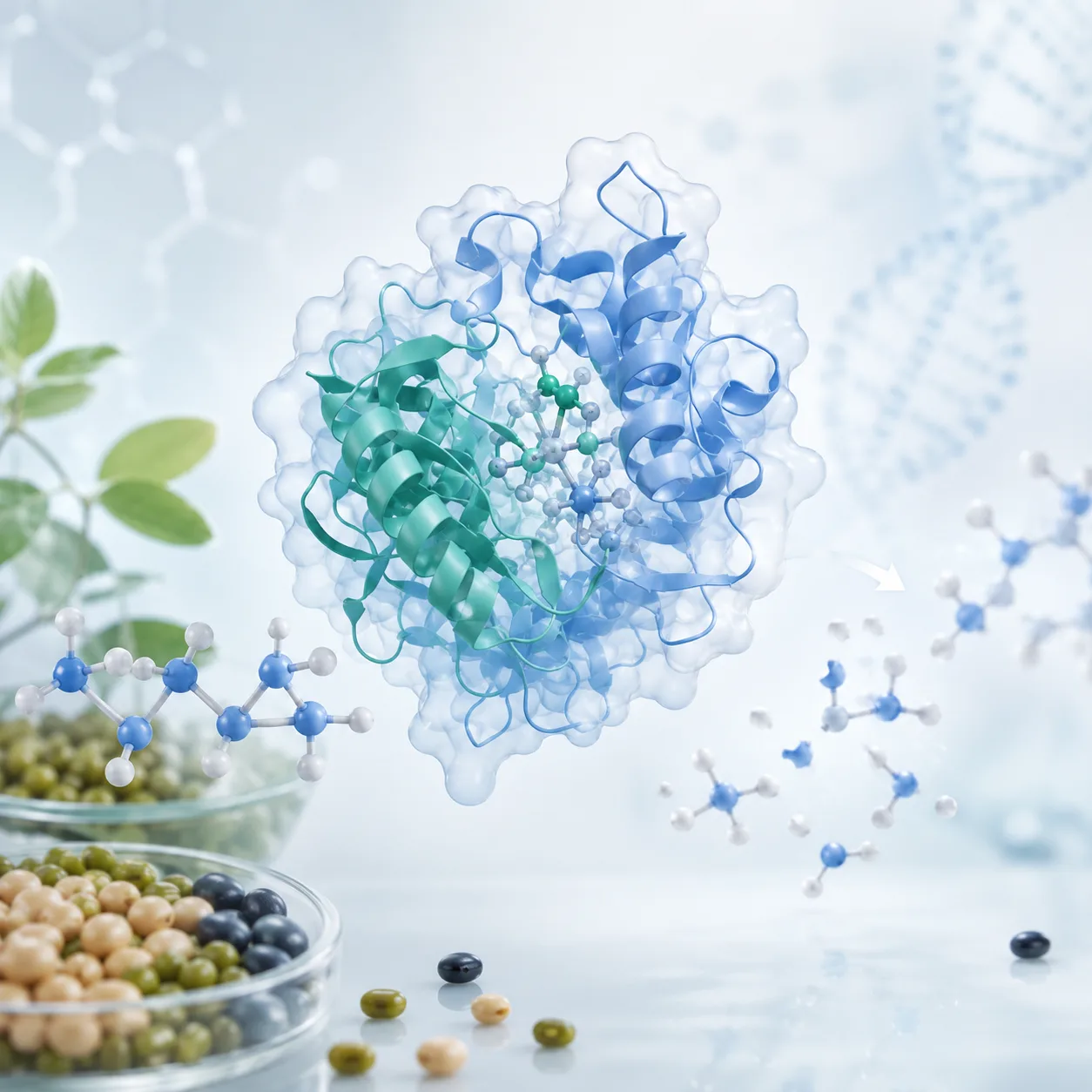
Catalytic Hydrogen Peroxide Dismutation
Antozyme Liquid Catalase contains a tetrameric heme-active center with four iron-protoporphyrin IX prosthetic groups. It exhibits one of the highest turnover numbers known in biochemistry—degrading up to 5,000,000 molecules of hydrogen peroxide per minute per enzyme molecule. By converting caustic H₂O₂ directly into environmentally benign water and gaseous oxygen without producing inorganic salts, it guarantees zero dye oxidation and prevents shade variation in sensitive reactive dyeing.
Cleavage Mode & Substrate Target
Oxidoreductase (2 H₂O₂ → 2 H₂O + O₂)
Turnover Rate & Specific Velocity
Engineered for rapid catalytic saturation, maintaining high turnover velocity at low inclusion rates. This reduces batch cycle time by up to 40% across commercial bioreactors.
Zero Harmful Side-Reactions
Purified via precision ultrafiltration to remove undesirable secondary enzymatic activities, preventing bitter peptides, haze artifacts, or textile fiber degradation.
Technical Specifications & Analytical Parameters
Antozyme manufactures Liquid Catalase (50,000 IU/mL) in both spray-dried micro-granule powder and stabilized liquid concentrate formats.
| Analytical Parameter | Certified Specification Standard | Compliance Monograph |
|---|---|---|
| Systematic Name | Standardized Catalase Powder | Verified PASS |
| EC Number | EC 1.11.1.6 | Verified PASS |
| CAS Registry Number | 9001-05-2 | Verified PASS |
| Microbial Host | Aspergillus niger (Non-GMO) | Verified PASS |
| Declared Activity | 50,000 U/g – 100,000 U/g | Verified PASS |
| Optimum Temperature | 35°C – 55°C | Verified PASS |
| Optimum Operating pH | 6.5 – 8.0 | Verified PASS |
| Carrier | Food-grade sodium chloride / maltodextrin | Verified PASS |
| Loss on Drying | ≤ 7.0% | Verified PASS |
| Heavy Metals (as Pb) | ≤ 10 ppm | Verified PASS |
| Total Plate Count | ≤ 10,000 CFU/g | Verified PASS |
| Standard Packaging | 25 kg fibre drums | Verified PASS |
| Shelf Life | 18 months below 25°C | Verified PASS |
Primary Industrial Application Areas & Dosing Guidelines
Select an industrial sector to inspect operating parameters, typical inclusion rates, and verified processing yield gains.
Eliminate Multiple Hot Washes & Chemical Reducers
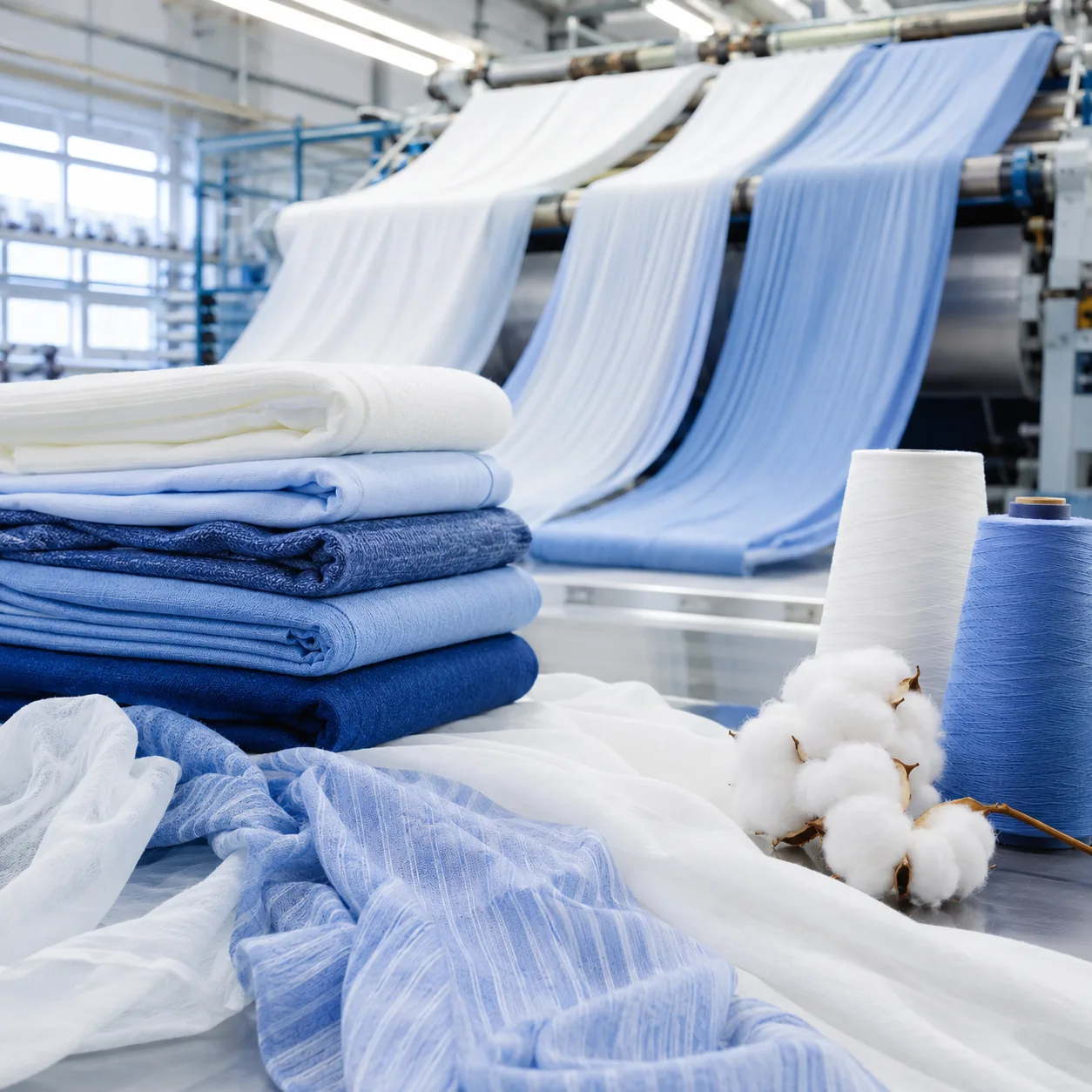
Injected directly into the residual peroxide bleaching bath. Dismutates 100% of residual H₂O₂ in 10–15 minutes, allowing immediate reactive dye addition in the same liquor without multiple hot drainage cycles.
Enzyme Kinetics, Temperature Window & Stability
Industrial bioprocesses require precise catalytic control under varying plant conditions. Antozyme Liquid Catalase (50,000 IU/mL) is formulated for consistent reaction kinetics across wide thermal and pH gradients.
Operating Temperature Plateau (30°C – 55°C)
Liquid Catalase operates efficiently across ambient industrial temperatures (20°C–55°C). In textile dyeing vessels, applying catalase at the tail end of the hot bleaching cycle (50°C–55°C) leverages optimal reaction kinetics while conserving thermal energy for subsequent dye bath ramps.
Broad Industrial pH Range (5.0 – 10.0)
Antozyme Liquid Catalase remains exceptionally stable between pH 6.0 and 9.5. This broad operating plateau eliminates the need for acid over-neutralization in textile dye baths, allowing direct injection as soon as the bath pH is brought down to 6.5–8.0 with mild acetic or citric acid.
Substrate Affinity & Zero Salt Generation
Unlike chemical reducers (sodium hydrosulfite, sodium bisulfite) which form inorganic sulfate salts that elevate bath TDS and interfere with reactive dye solubility, Catalase is a true biological catalyst. It requires zero chemical cofactors and leaves zero inorganic residues in the dye bath or effluent.
Industrial Raw Material Compatibility & Specific Dosing Matrix
Recommended commercial inclusion rates across primary industrial substrates. Exact dosage varies based on dry solids concentration, retention time, and desired endpoint.
| Substrate Type | Solids % (DS) | Operating Temp | Recommended Dosing | Target Metric | Demonstrated Process Gain |
|---|---|---|---|---|---|
| Cotton Bleached Liquor (Softflow / Jet) | Liquor ratio 1:8 | 45°C – 55°C | 0.2 – 0.4 g/L bath | 0 ppm H₂O₂ (Merck strip) | Eliminates 2 hot rinses; saves 35 L water/kg fabric and 45 min machine cycle |
| Yarn Package Dyeing Machine | Liquor ratio 1:6 | 50°C | 0.3 – 0.5 g/L | 0 ppm residual | Uniform core-to-surface peroxide elimination; eliminates uneven dye absorption |
| Denim Bleach Wash Bath (Laundry Drum) | Liquor ratio 1:5 | 40°C – 50°C | 0.3 – 0.6 g/L | Complete quenching | Zero yellowing of indigo warp; prepares fabric cleanly for resin finishes |
| Textile Wet Processing ETP Stream | Inlet H₂O₂ 300–800 ppm | Ambient (25°C–35°C) | 10 – 25 ppm catalase | < 2 ppm H₂O₂ | Prevents bio-sludge bacterial die-off in aeration tanks; 0% TDS increase |
| Recycled Kraft Pulp Deinking Stock | Stock consistency 10% | 45°C – 55°C | 0.15 – 0.3 kg / MT | Zero unreacted peroxide | Prevents pitch agglomeration and scale formation on paper wire meshes |
| Dairy CIP Aseptic Rinse Water | Aqueous wash | 20°C – 30°C | 0.05 – 0.1 g/L | Undetectable H₂O₂ | Protects starter culture inoculation from oxidation failure in cheese/yogurt vats |
Comparative Benchmark: Antozyme vs. Conventional Alternatives
Head-to-head performance comparison across seven critical commercial and operational parameters.
| Operational Metric | Antozyme Proprietary Formulation | Conventional Product | Chemical Reagent / Alternative |
|---|---|---|---|
| Primary Mode of Action | Enzymatic Dismutation (2 H₂O₂ → 2 H₂O + O₂) | Chemical Reduction (Sodium Hydrosulfite / Bisulfite) | Repeated Hot Water Rinses (3x–4x overflow) |
| Water Consumption per Batch | Zero extra water (Same bath dyeing) | Requires 1 fresh rinse to clear chemicals | Consumes 30 – 50 Litres / kg fabric |
| Effluent Salt Burden (TDS) | 0 mg/L (Zero inorganic sulfate salts) | +1,500 – 3,000 mg/L TDS spike | Low TDS but massive volume to ETP |
| Reactive Dye Shade Consistency | 100% Guaranteed zero dye oxidation | Risk of shade dulling if over-dosed | High risk of residual peroxide dye bleaching |
| Total Cycle Time Impact | 10 – 15 minutes total dismutation | 25 – 35 minutes with rinsing | 60 – 90 minutes of water filling & draining |
| Steam & Thermal Energy Savings | Saves 35% – 45% boiler steam per dye cycle | Moderate steam savings | Massive steam waste heating rinse water |
| ZDHC & Eco-Passport Compliance | ZDHC Level 3 & OEKO-TEX Standard 100 | High sulfur dioxide / sulfite emissions | Compliant but ecologically wasteful |
4-Stage Continuous Operating Plant SOP
Plant operating protocol designed for industrial shift supervisors, brewmasters, and chemical plant operators.
Post-Bleach Bath Cooling & pH Check
After hydrogen peroxide bleaching is complete, drop temperature to 50°C–55°C (or maintain ambient). Check bath pH; if above 8.5, neutralize with mild acetic or citric acid to pH 6.5–7.5.
Catalase Injection into Same Liquor
Inject Antozyme Liquid Catalase at 0.2–0.4 g/L directly into the circulating bleaching liquor. Do NOT drain the bath or add fresh water.
10-Minute Enzymatic Circulation & Strip Verification
Circulate the bath for 10 to 12 minutes. Dip a Merckoquant® or equivalent peroxide test strip (0–100 ppm) into the liquor.
Direct Dye & Auxiliary Addition
Immediately add reactive dyes, leveling agents, and salt directly into the same liquor. Proceed to standard reactive dyeing temperature ramp.
Specimen Certificate of Analysis (COA)
Lot-specific analytical report demonstrating typical batch release testing and microbial clearance.
| Test Parameter | Analytical Test Method | Standard Release Limit | Actual Lot Result | Verification |
|---|---|---|---|---|
| Catalase Enzymatic Activity | UV Absorption at 240 nm (FCC) | ≥ 50,000 IU/mL | 53,200 IU/mL | PASS |
| Physical Appearance | Visual Inspection | Dark brown clear liquid | Conforms | PASS |
| Specific Gravity at 20°C | Pycnometer / Hydrometer | 1.15 – 1.25 g/mL | 1.19 g/mL | PASS |
| pH Value (Direct) | pH Electrode at 25°C | 5.0 – 7.5 | 6.2 | PASS |
| Heavy Metals (as Pb) | ICP-MS Spectrometry | ≤ 10 ppm | < 1.5 ppm | PASS |
| Total Aerobic Microbial Count | ISO 4833-1 | ≤ 5,000 CFU/mL | 320 CFU/mL | PASS |
| Coliforms & E. coli | ISO 4832 | Negative in 1 mL | Negative | PASS |
| Peroxide Decomposition Efficiency | Merck 100 ppm H2O2 test | 0 ppm in < 15 min | 0 ppm in 9 min | PASS |
Packaging & Loading Configurations
Export packaging is designed to safeguard enzyme potency across international ocean freight lanes.
Double food-grade polyethylene inner heat-sealed liners with tamper-evident locking rings. Net: 25.0 kg | Tare: 1.8 kg.
Heavy-duty UN-rated high-density polyethylene containers with degassing caps to prevent pressure accumulation during sea transit.
Accommodates 800 fibre drums (20 Metric Tons net) palletized and shrink-wrapped with maritime container desiccants.
Global Port Transit Time Matrix
Fast ocean sailings routed from India's premier western ports: Nhava Sheva (JNPT) and Mundra Port.
| Destination Port | Origin Port | Sailing Transit | Service Frequency |
|---|---|---|---|
| Chittagong, Bangladesh | Nhava Sheva / Mundra | 5 – 7 Days | Bi-weekly Direct feeder |
| Jebel Ali, Dubai (UAE) | Mundra Port | 3 – 5 Days | 3 Sailings / Week |
| Ho Chi Minh City, Vietnam | Nhava Sheva | 10 – 14 Days | Weekly mainline service |
| Jakarta / Surabaya, Indonesia | Nhava Sheva | 12 – 15 Days | Weekly direct vessel |
| Mombasa, Kenya (East Africa) | Mundra Port | 10 – 12 Days | Weekly direct route |
| Santos, Brazil (Latin America) | Nhava Sheva | 28 – 35 Days | Fortnightly mainline |
| Rotterdam, Netherlands (Europe) | Mundra / Nhava Sheva | 20 – 24 Days | Weekly express direct |
Complementary Industrial Enzymes
Commonly paired in industrial formulation with Liquid Catalase (50,000 IU/mL) to maximize biocatalytic efficiency:
Target Industry Solutions Hubs
Explore in-depth engineering guides for specific industrial processing verticals:
Frequently Asked Technical & Commercial Questions
Clear answers regarding Liquid Catalase (50,000 IU/mL) dosing calibration, kinetics, shelf life, and international export logistics.
Request a Free 100g Lab Sample or Bulk Quote
All inquiries deliver directly to info@antozymebiotech.com and our export desk. Typical response time within 4 business hours.