
High-Viability Probiotic Dairy Starter Blends Lactobacillus acidophilus + Bifidobacterium + L. casei
Formulated for functional dairy products, drinking yogurts, fermented kefir, and probiotic lassi, AntoCulture-PRO™ delivers clinically documented probiotic strains: Lactobacillus acidophilus, Bifidobacterium animalis subsp. lactis, and Lacticaseibacillus casei. Engineered for high gastric acid survival, bile salt resistance, and verified cell viability retention (> 1×10⁸ CFU/mL) through 45 days of commercial shelf life.
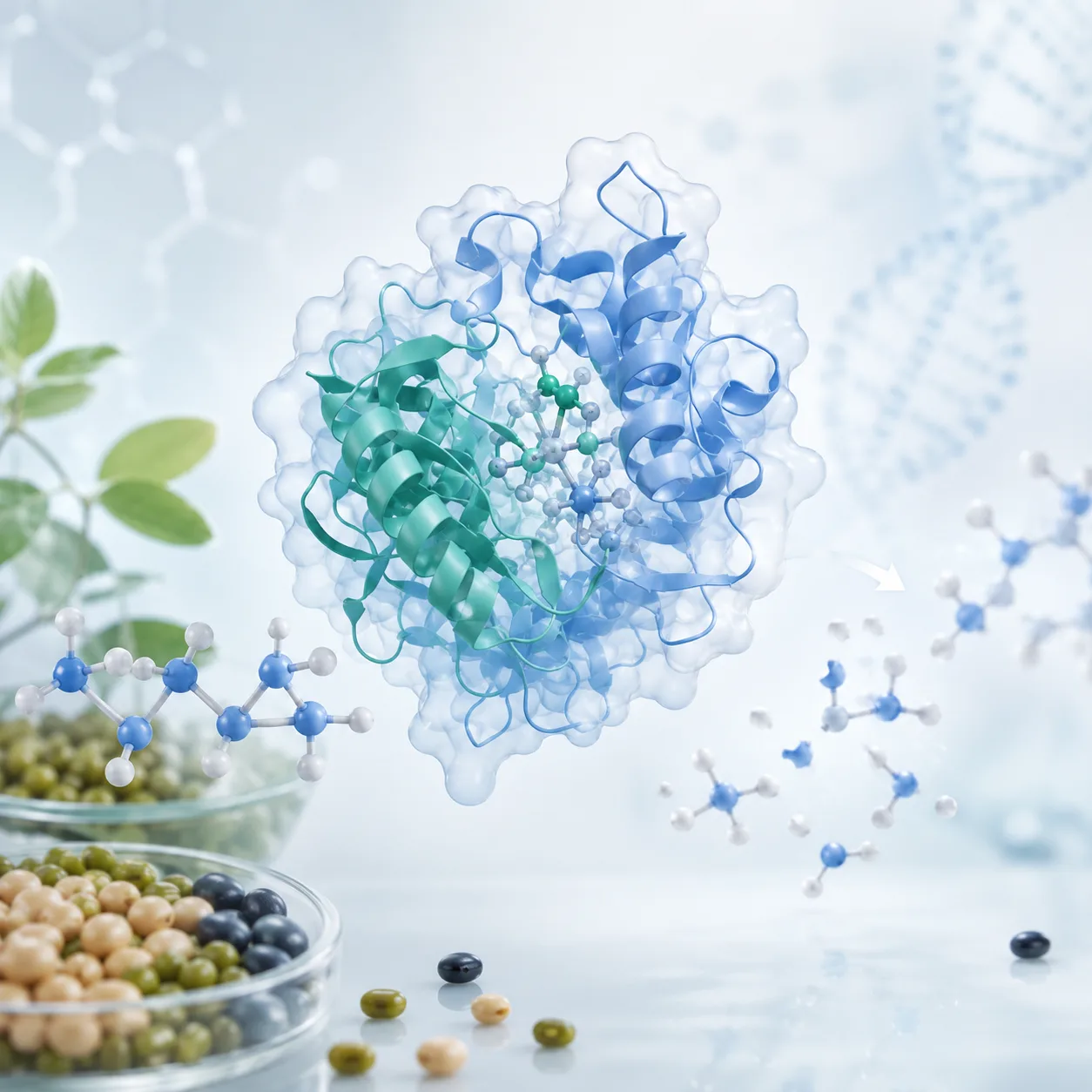
Probiotic Colonization Kinetics, Bile Tolerance & Acid Resistance
AntoCulture-PRO™ strains possess fortified cell envelope S-layer proteins and high F1F0-ATPase activity, enabling active survival across harsh gastric acid barriers (pH 2.0–2.5) and duodenum bile salt concentrations (0.3% w/v). Active bile salt hydrolase (BSH) enzyme expression deconjugates bile acids, stimulating gut colonization. Slow, steady fermentation produces predominantly physiological L(+)-lactic acid alongside natural antimicrobial bacteriocins (acidophilin, lactocidin) that suppress gastrointestinal pathogens while imparting a smooth, non-pungent flavor.
Cleavage Mode & Substrate Target
Gastric Acid Survival, Bile Salt Hydrolase (BSH) Activity & L(+) Lactic Bio-Ferment
Turnover Rate & Specific Velocity
Engineered for rapid catalytic saturation, maintaining high turnover velocity at low inclusion rates. This reduces batch cycle time by up to 40% across commercial bioreactors.
Zero Harmful Side-Reactions
Purified via precision ultrafiltration to remove undesirable secondary enzymatic activities, preventing bitter peptides, haze artifacts, or textile fiber degradation.
Technical Specifications & Analytical Parameters
Antozyme manufactures Probiotic Dairy Starter Blend in both spray-dried micro-granule powder and stabilized liquid concentrate formats.
| Analytical Parameter | Certified Specification Standard | Compliance Monograph |
|---|---|---|
| Product Form | Lyophilized Free-Flowing Fine Powder | Verified PASS |
| Strains Included | L. acidophilus, B. animalis subsp. lactis, L. casei, S. thermophilus | Verified PASS |
| Viable Probiotic Count | ≥ 1.0 × 10¹¹ CFU/g at packaging | Verified PASS |
| Gastric Acid Tolerance | Survival > 85% at pH 2.5 for 2 hours | Verified PASS |
| Bile Salt Resistance | Survival > 80% in 0.3% oxgall bile salts | Verified PASS |
| Moisture Content | < 4.0% | Verified PASS |
| Coliforms | < 10 CFU/g (Absent in 1g) | Verified PASS |
| Yeasts & Molds | < 10 CFU/g | Verified PASS |
| Salmonella spp. | Absent in 25g | Verified PASS |
| Heavy Metals (as Pb) | < 5 ppm | Verified PASS |
| Storage Condition | -18°C deep freeze (24 mo) / +4°C cold room (6 mo) | Verified PASS |
| Certifications | FSSAI, ISO 9001:2015, Halal Certified, GMP | Verified PASS |
Primary Industrial Application Areas & Dosing Guidelines
Select an industrial sector to inspect operating parameters, typical inclusion rates, and verified processing yield gains.
Guaranteed 10 Billion Viable CFU per 100mL Serving
Enables commercial dairy brand owners to guarantee label claims of 1×10¹⁰ CFU viable probiotics per bottle throughout 45 days of retail shelf life.
Enzyme Kinetics, Temperature Window & Stability
Industrial bioprocesses require precise catalytic control under varying plant conditions. Antozyme Probiotic Dairy Starter Blend is formulated for consistent reaction kinetics across wide thermal and pH gradients.
Physiological Incubation Temperature (37°C – 40°C)
Optimum cell division occurs at human physiological temperature (37°C–39°C). S. thermophilus provides rapid early acidification while Bifidobacterium and L. acidophilus actively replicate.
Balanced L(+) Lactic Bio-Ferment Trajectory
Reaches fermentation equilibrium at pH 4.65–4.75 in 4.5 to 5.0 hours. Produces mild, well-tolerated L(+)-lactic acid rather than sharp D(-)-lactic acid.
Gastric Acid & Intestinal Bile Survival
Laboratory challenged at pH 2.0 for 120 minutes and 0.3% bile salt concentration, demonstrating > 85% viable cell recovery to guarantee effective gut delivery.
Industrial Raw Material Compatibility & Specific Dosing Matrix
Recommended commercial inclusion rates across primary industrial substrates. Exact dosage varies based on dry solids concentration, retention time, and desired endpoint.
| Substrate Type | Solids % (DS) | Operating Temp | Recommended Dosing | Target Metric | Demonstrated Process Gain |
|---|---|---|---|---|---|
| Pasteurized Whole Milk (3.5% Fat) | 12.0% TS | 38°C – 39°C | 10U / 100 Liters | Target pH 4.65 in 4h 30m | Creamy probiotic drink; > 1×10⁸ CFU/mL live count |
| Skim Milk Base Fortified with Inulin Prebiotics | 13.5% TS | 38°C | 12U / 100 Liters | Target pH 4.60 in 4h 45m | Synbiotic blend (prebiotic + probiotic); velvety mouthfeel |
| Traditional Sweetened Lassi Milk Base | 14.5% TS | 39°C | 10U / 100 Liters | Target pH 4.70 in 4h 15m | Smooth homogenous beverage; zero settling in bottle |
| Oat Milk Beverage Base (Enzyme-Treated) | 11.0% TS | 38°C | 15U / 100 Liters | Target pH 4.40 in 5h 00m | Clean vegan lactic tang; mask earthy plant off-flavors |
| Concentrated Whey Protein Beverage Base | 15.0% TS | 37°C – 39°C | 12U / 100 Liters | Target pH 4.70 in 4h 30m | High protein recovery; prevents chalky mouthfeel |
| Direct Vat Dahi Milk (Buffalo Milk 6.0% Fat) | 15.5% TS | 39°C | 8U / 100 Liters | Target pH 4.75 in 4h 20m | Firm glossy cup set curd; enriched with live probiotics |
Comparative Benchmark: Antozyme vs. Conventional Alternatives
Head-to-head performance comparison across seven critical commercial and operational parameters.
| Operational Metric | Antozyme Proprietary Formulation | Conventional Product | Chemical Reagent / Alternative |
|---|---|---|---|
| Viable Cell Count | ≥ 1.0 × 10¹¹ CFU/g (Lyophilized) | 1.0 – 5.0 × 10¹⁰ CFU/g | 10⁹ – 10¹⁰ CFU/g |
| Gastric Acid Survival (pH 2.5, 2h) | > 85% Viable Recovery | 35% – 50% survival | < 30% survival |
| Bile Salt Resistance (0.3% Bile) | > 80% Active Growth | 40% – 60% resistance | < 40% resistance |
| In-House Lyophilization Facility | 1 MT / Month in Vadodara, Gujarat | Third-party trading broker | Imported European stockist |
| Cold-Chain Delivery (Asia/ME) | 48–72h Express Insulated Cold-Pack | 3–5 weeks shipping delays | 4–6 weeks shipping delays |
| Clean-Label Vegetarian Status | 100% Halal, GMP & FSSAI Certified | Unverified growth culture media | Variable compliance |
| Finished Product Viability (30 Days) | ≥ 1.0 × 10⁸ CFU/mL in bottle | < 1.0 × 10⁷ CFU/mL (rapid death) | < 1.0 × 10⁶ CFU/mL |
4-Stage Continuous Operating Plant SOP
Plant operating protocol designed for industrial shift supervisors, brewmasters, and chemical plant operators.
Milk Base Formulation & Thermal Sanitation
Formulate milk base with 10%–13% total solids. If adding prebiotic fiber (e.g. chicory inulin at 1.5%–2.0%), blend thoroughly under high-shear mixing. Pasteurize at 85°C for 20 minutes (or 92°C for 3 minutes) to eradicate all competitive native bacteria and phages. Cool rapidly to 38.0°C ± 0.5°C.
DVI Sachet Inoculation & Dispersion
Remove AntoCulture-PRO™ sachet from -18°C storage. Sanitize outer foil envelope with 70% alcohol and open in sterile conditions. Sprinkle lyophilized granules directly into the 38°C milk base while agitating at moderate speed. Agitate for 5 minutes, then leave completely undisturbed.
Physiological Incubation & Probiotic Replication
Maintain incubation vessel at 38°C–39°C under closed, inert conditions (avoid air incorporation, as Bifidobacteria are microaerophilic). Incubate for 4.5 to 5.0 hours until pH gently drops to 4.65–4.75. Verify viable cell proliferation via flow cytometry or plating.
Gentle Cooling, Bottling & Cold-Chain Dispatch
Cool the fermented probiotic base gently through a tubular cooler down to < 18°C within 15 minutes. Bottle in UV-barrier PET or glass bottles under positive air pressure (HEPA filtration). Store immediately at 4°C ± 1°C. Cold-chain must be maintained during commercial warehousing and distribution.
Specimen Certificate of Analysis (COA)
Lot-specific analytical report demonstrating typical batch release testing and microbial clearance.
| Test Parameter | Analytical Test Method | Standard Release Limit | Actual Lot Result | Verification |
|---|---|---|---|---|
| Total Probiotic Count | ISO 29981 / IDF 220 (MRS Clindamycin) | ≥ 1.0 × 10¹¹ CFU/g | 1.52 × 10¹¹ CFU/g | PASS |
| L. acidophilus Viability | Selective MRS Bile Agar | ≥ 4.0 × 10¹⁰ CFU/g | 5.2 × 10¹⁰ CFU/g | PASS |
| Bifidobacterium Viability | Selective TOS-MUP Agar | ≥ 3.0 × 10¹⁰ CFU/g | 4.5 × 10¹⁰ CFU/g | PASS |
| Coliforms | ISO 4832 | < 10 CFU/g | < 10 CFU/g (Absent) | PASS |
| Yeasts & Molds | ISO 6611 | < 10 CFU/g | < 10 CFU/g | PASS |
| Salmonella spp. | ISO 6579-1 / 25g | Absent in 25g | Absent | PASS |
| Listeria monocytogenes | ISO 11290-1 / 25g | Absent in 25g | Absent | PASS |
| Heavy Metals (Lead) | ICP-MS | < 2.0 ppm | < 0.12 ppm | PASS |
Packaging & Loading Configurations
Export packaging is designed to safeguard enzyme potency across international ocean freight lanes.
Double food-grade polyethylene inner heat-sealed liners with tamper-evident locking rings. Net: 25.0 kg | Tare: 1.8 kg.
Heavy-duty UN-rated high-density polyethylene containers with degassing caps to prevent pressure accumulation during sea transit.
Accommodates 800 fibre drums (20 Metric Tons net) palletized and shrink-wrapped with maritime container desiccants.
Global Port Transit Time Matrix
Fast ocean sailings routed from India's premier western ports: Nhava Sheva (JNPT) and Mundra Port.
| Destination Port | Origin Port | Sailing Transit | Service Frequency |
|---|---|---|---|
| Chittagong, Bangladesh | Nhava Sheva / Mundra | 5 – 7 Days | Bi-weekly Direct feeder |
| Jebel Ali, Dubai (UAE) | Mundra Port | 3 – 5 Days | 3 Sailings / Week |
| Ho Chi Minh City, Vietnam | Nhava Sheva | 10 – 14 Days | Weekly mainline service |
| Jakarta / Surabaya, Indonesia | Nhava Sheva | 12 – 15 Days | Weekly direct vessel |
| Mombasa, Kenya (East Africa) | Mundra Port | 10 – 12 Days | Weekly direct route |
| Santos, Brazil (Latin America) | Nhava Sheva | 28 – 35 Days | Fortnightly mainline |
| Rotterdam, Netherlands (Europe) | Mundra / Nhava Sheva | 20 – 24 Days | Weekly express direct |
Complementary Industrial Enzymes
Commonly paired in industrial formulation with Probiotic Dairy Starter Blend to maximize biocatalytic efficiency:
Target Industry Solutions Hubs
Explore in-depth engineering guides for specific industrial processing verticals:
Frequently Asked Technical & Commercial Questions
Clear answers regarding Probiotic Dairy Starter Blend dosing calibration, kinetics, shelf life, and international export logistics.
Request a Free 100g Lab Sample or Bulk Quote
All inquiries deliver directly to info@antozymebiotech.com and our export desk. Typical response time within 4 business hours.